Retail

Silkroad

  • Website case study
  • Live website
A small e-commerce website with multivendor storefronts.An e-commerce website and logo design for Silkroad, an online marketplace in Ethiopia. The website connects product discovery with seller storefronts, bringing industrial supplies and other categories into a clear shopping experience.
silkroad.et
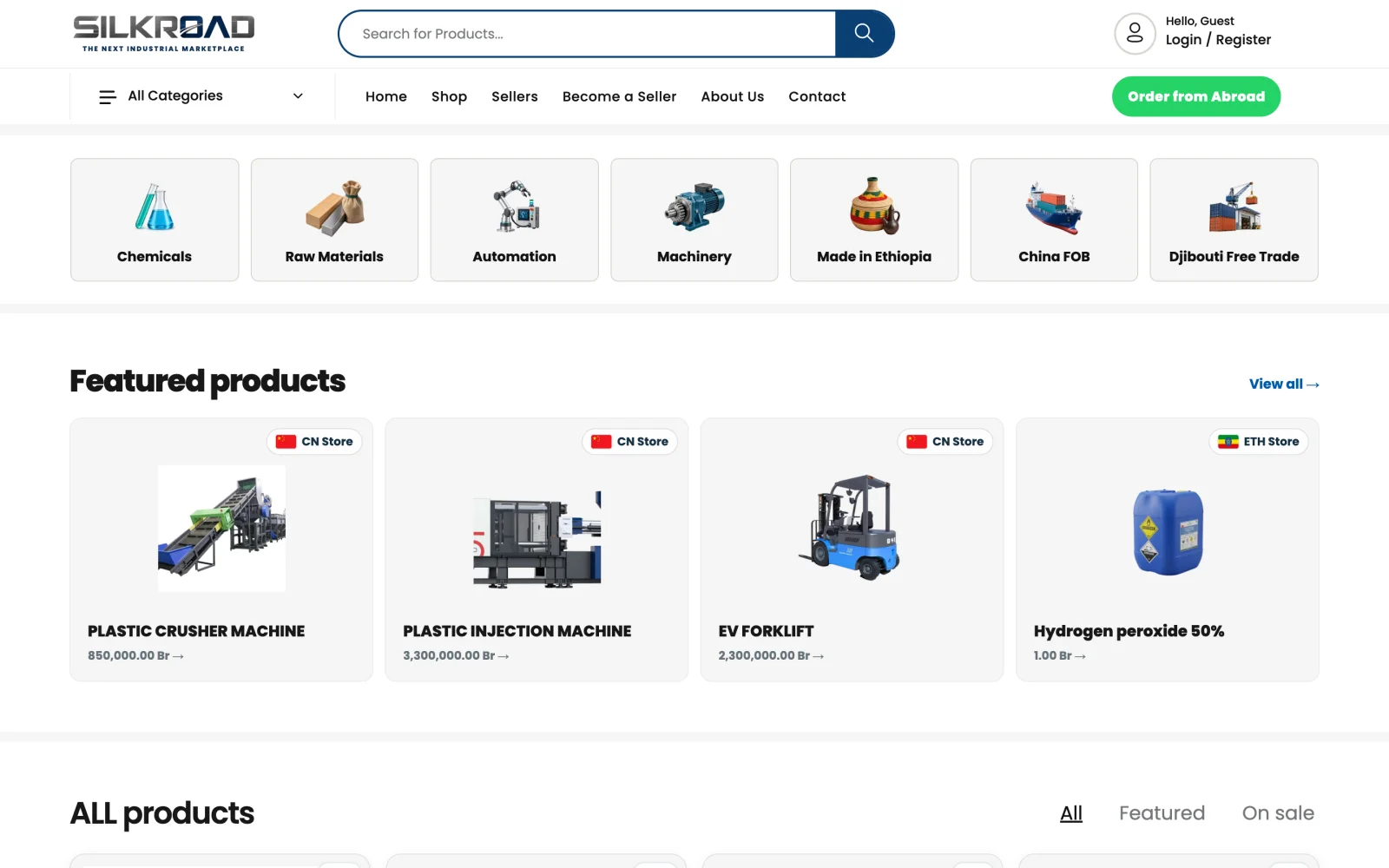
Silkroad website home page

Website quality we achieved using Lighthouse

Website quality achieved using Lighthouse

Performance

Accessibility

Best Practices

SEO

From business goal to usable website

  • Addis Ababa
  • E-Commerce
  • Multivendor
  • Website
  • Logo Design

Shop

Product discovery
Sellers

Multivendor storefronts

Brand

Logo design

Silkroad wordmark designed by DreamTech
Logo and brand identity

silkroad.et

Try Online

Background

Silkroad is an online marketplace based in Addis Ababa where products from multiple sellers are listed side by side. Its catalog runs from industrial supplies to other categories, so shoppers arrive with very different needs.

The scope was intentionally compact, a small e-commerce website with multivendor storefronts, and it combined two deliverables: the Silkroad wordmark and the website itself.

A marketplace answers to two groups at once. Buyers want to find products quickly. Sellers want a storefront that represents them and a straightforward way to join. Silkroad had to serve both from the same site.

Challenge

Make products from different sellers easy to discover while giving each vendor a recognizable storefront and a clear registration path.

A mixed catalog

Industrial supplies sit next to very different product types, so search and categories had to work across the whole range.

Sellers who stay visible

On many marketplaces the vendor disappears behind the product. Silkroad needed each seller to keep an identity a shopper can recognize and come back to.

Two kinds of account

Customers and sellers sign up for different reasons, and each needed to land on the right registration path without confusion.

A wordmark for a busy header

The marketplace needed a logotype that reads clearly at small sizes and above dense product listings.

Methodology & Approach

Silkroad works as two parallel routes through one site. Shop is the buyer's route: search, categories, and product listings. Sellers is the vendor route: a directory of storefronts, each with its own profile. Keeping the routes distinct in the navigation lets a visitor choose between looking for a product and looking for a store.

Registration follows the same split. Shoppers create a customer account, while a business that wants to sell follows its own path to become a seller.

  • Search plus categoriesProduct search and category filters support both shoppers who know what they want and those who browse.
  • Seller directoryA dedicated Sellers page lists the vendor storefronts on the marketplace.
  • Separate sign-up pathsCustomer and seller accounts each have their own entry point.
  • Focused scopeThe build concentrates on discovery and storefronts, which keeps the interface uncluttered.

Solution

We created the Silkroad wordmark and a multivendor e-commerce website with product search, category browsing, seller profiles, and customer and seller account pathways.

Shopper, Seller use silkroad.et.Uses

Shopper

Person

Searches or browses the catalog and opens a customer account

Seller

Person

Registers through become-a-seller and gets a storefront

silkroad.et

Software system

Multivendor store with product search and seller storefronts

Product catalog

The Shop section brings every seller's products into one searchable catalog.

  • Product search
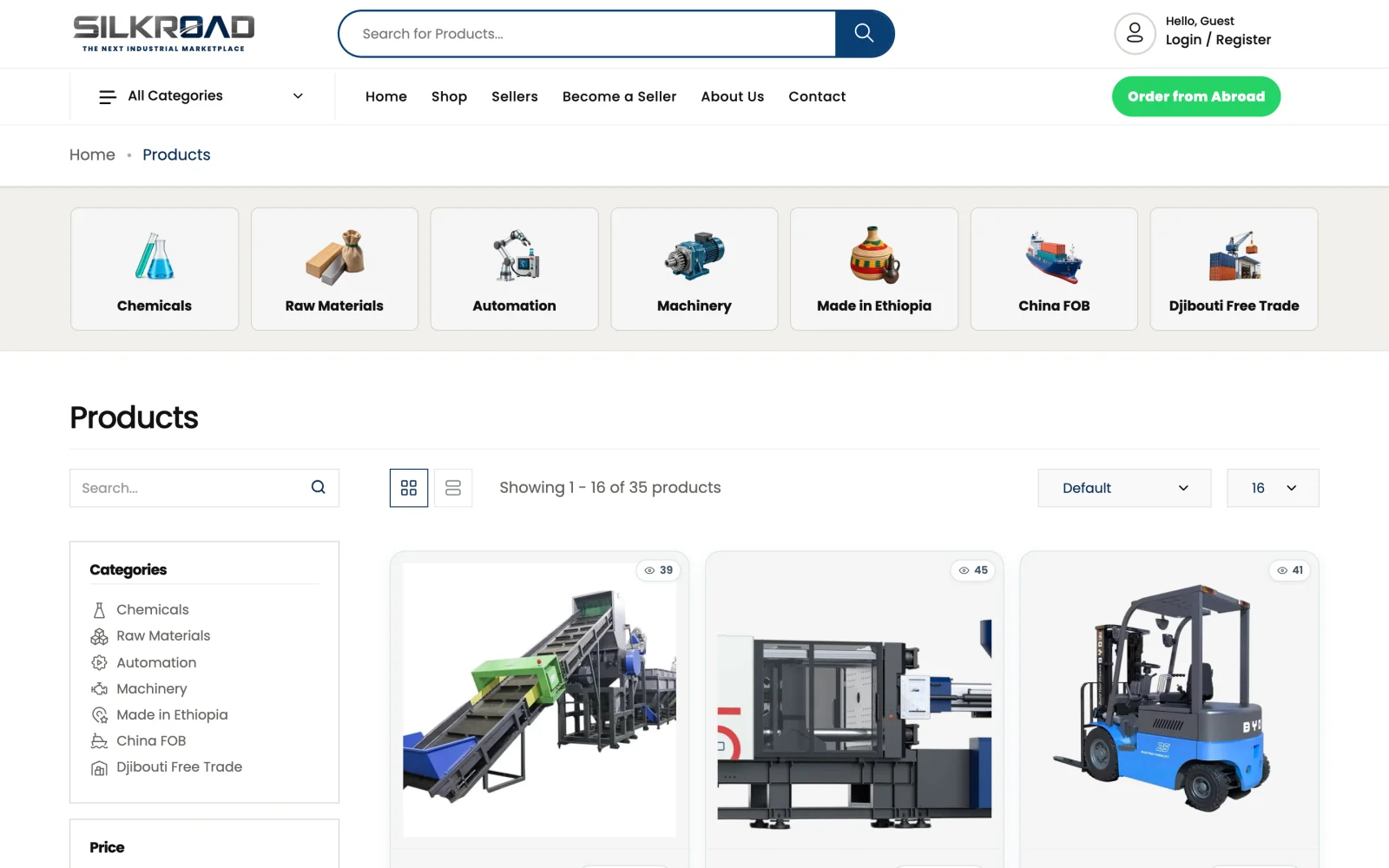
  • Category browsing and filters
  • Listings that span industrial supplies and other categories

Multivendor storefronts

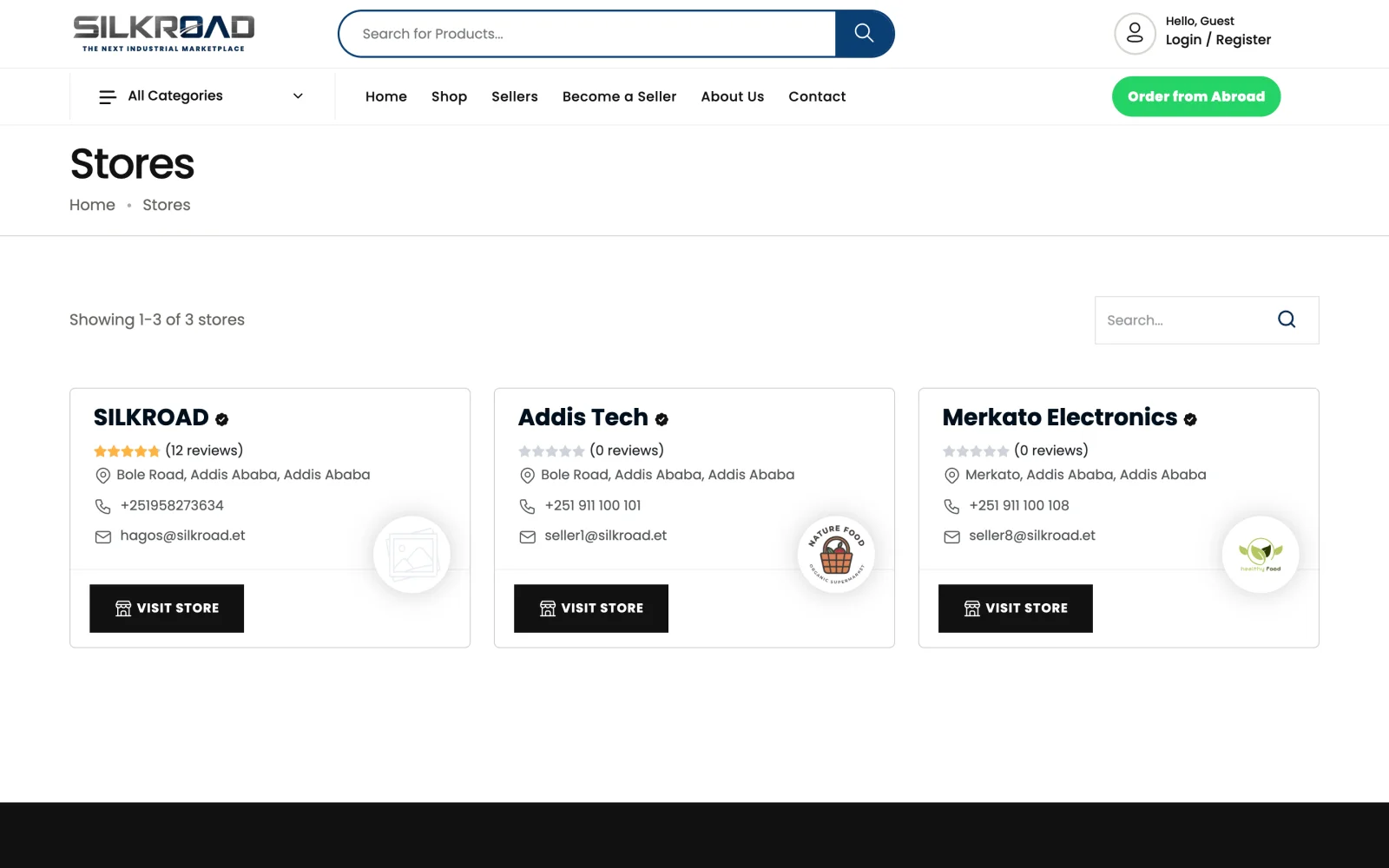
Each vendor gets a storefront of its own, reachable from the seller directory.

  • A directory of individual sellers
  • A profile page for every vendor
  • Storefronts that give sellers a recognizable presence

Seller registration

A dedicated become-a-seller pathway lets businesses register to list their products on Silkroad.

Customer accounts

Shoppers have an account pathway of their own, kept apart from seller sign-up.

Silkroad wordmark

Our team designed the Silkroad wordmark, a wide horizontal logotype sized to sit comfortably in the marketplace header.

Design, visibility, speed, and action

The case study documents delivered capabilities. It does not present unverified sales or traffic growth as fact.

UX and responsive design

A clear page hierarchy and adaptable layouts for desktop, tablet, and mobile visitors.

Technical SEO foundation

Search-friendly structure, semantic content, metadata, and crawlable navigation patterns.

Performance-minded delivery

Optimized media, reserved image space, and lean interaction patterns designed to reduce friction.

Conversion pathways

Prominent calls to action that guide visitors toward enquiries, downloads, applications, or purchases.

Review the website home page and any additional live pages captured during the latest portfolio review.
silkroad.et
Silkroad website home page
Website home page
silkroad.et
Silkroad product catalogue with category filters and product listings
Product catalogue
silkroad.et
Silkroad seller directory with individual vendor storefronts
Multivendor storefront directory

Project Results

The marketplace runs at silkroad.et as a compact multivendor site where shoppers and sellers each have a clear way in.

  • Shoppers can search the catalog or browse by category across industrial supplies and other products.
  • Visitors can open an individual seller's storefront and view that vendor's profile.
  • Businesses can register as sellers through a dedicated pathway.
  • Customers can create accounts through their own sign-up route.
  • Silkroad presents a recognizable wordmark across its pages.

More Case Studies

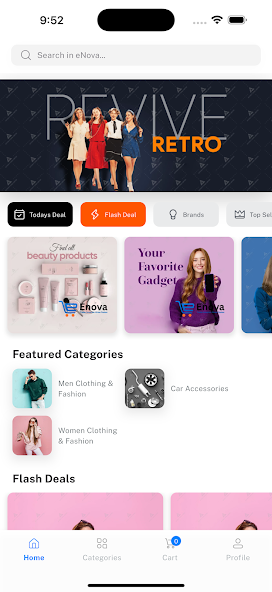
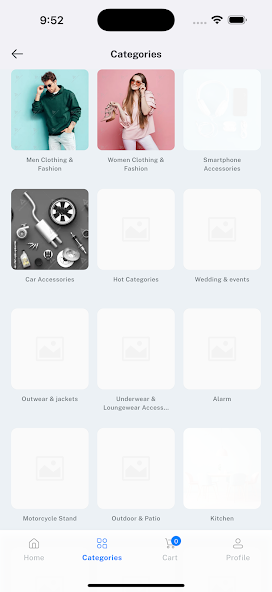
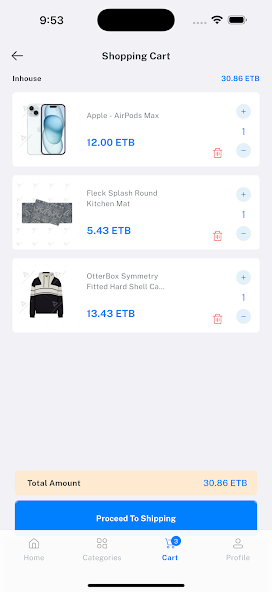
Enova Mart

We built Enova Mart, an all-in-one marketplace app where customers shop with secure checkout and businesses list and manage their products online.

  • Mobile development
  • Custom development
  • Retail
  • E-commerce

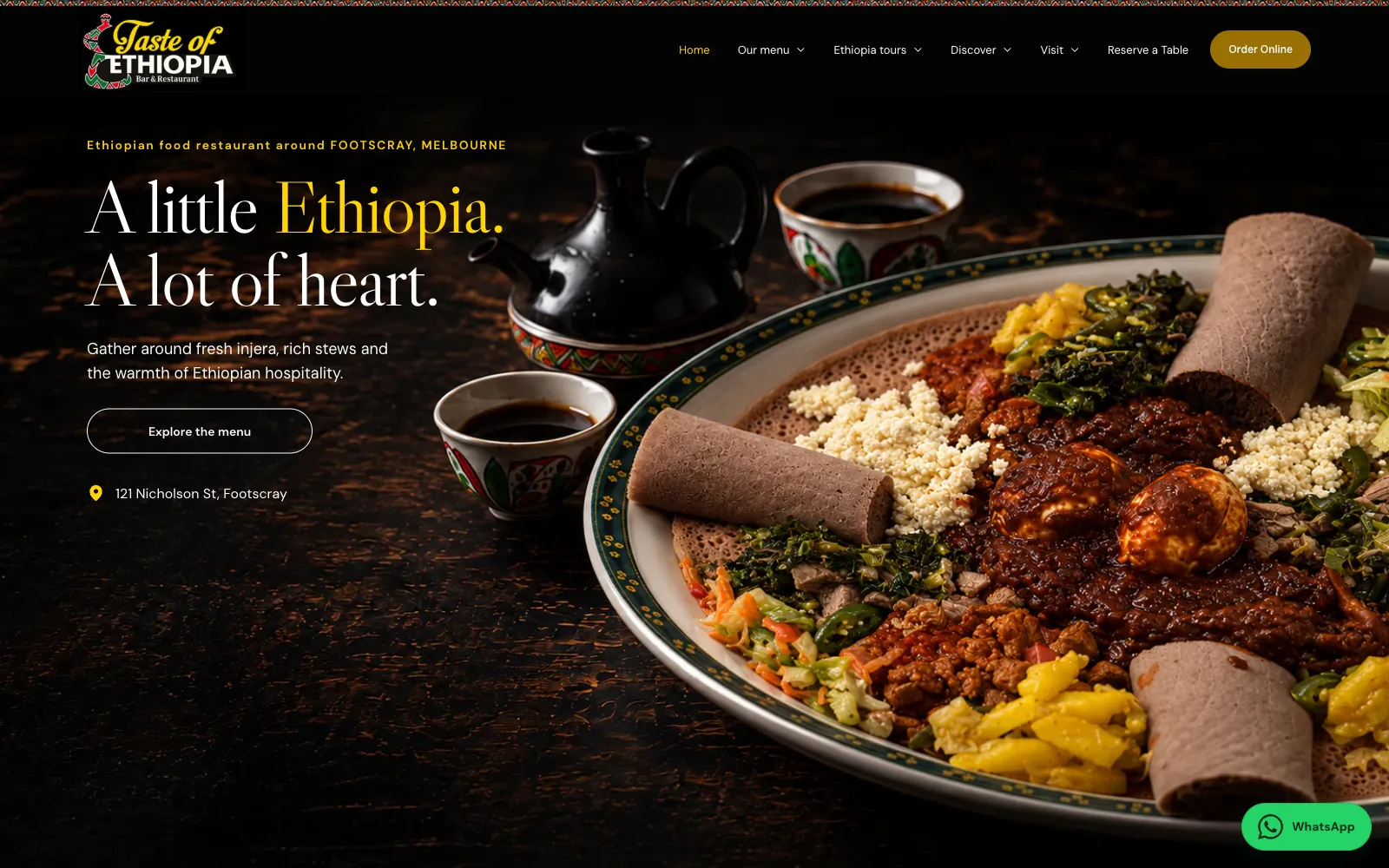
Taste of Ethiopia Bar & Restaurant

A restaurant website and logo design for Taste of Ethiopia in Melbourne. The website brings Ethiopian dishes into focus with food photography, individual menu pages, and clear paths to table requests, online ordering, and directions.

  • Web development
  • Design
  • Hospitality
  • Website

ENPLAST PLC

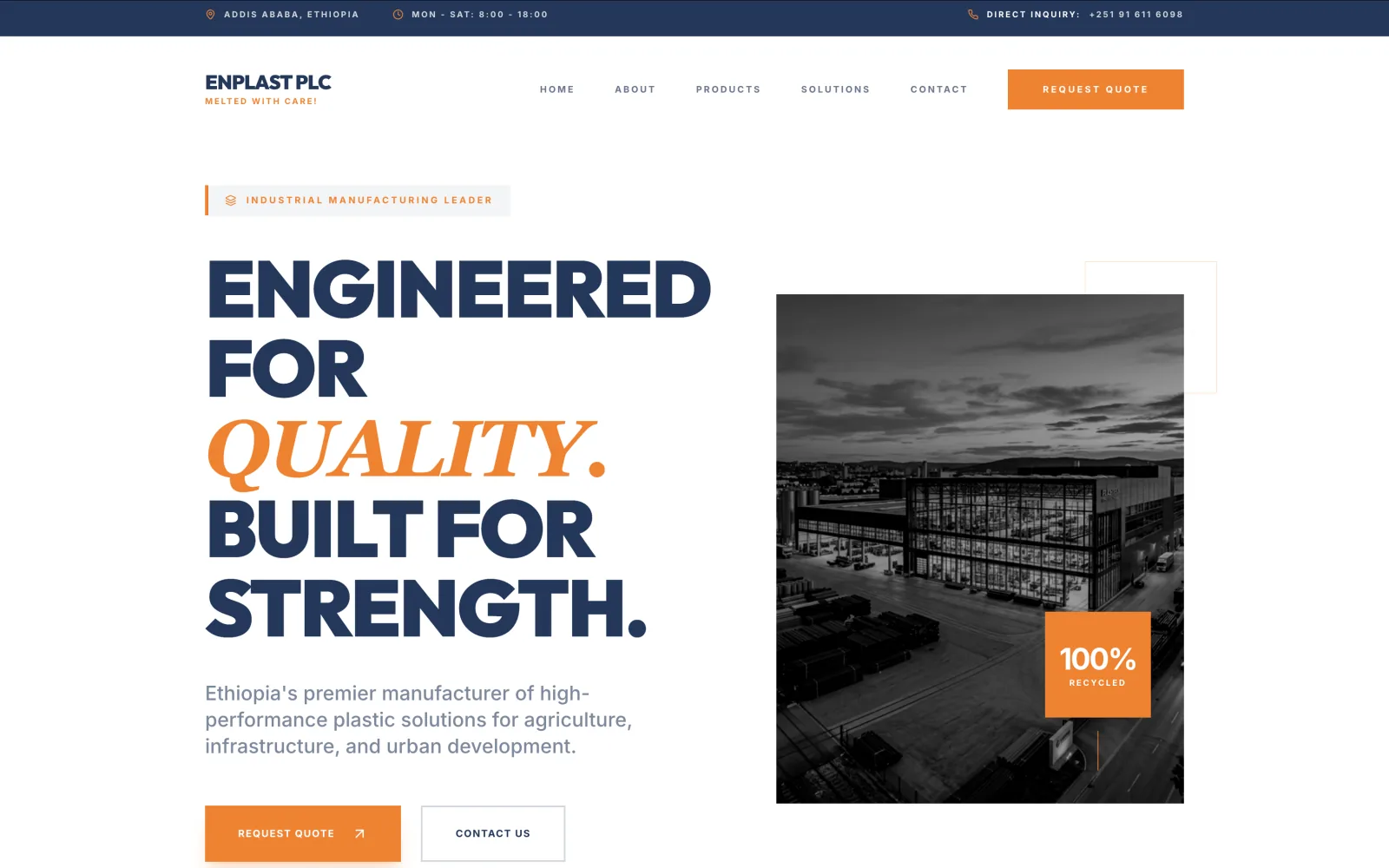
ENPLAST PLC needed a modern corporate website to present its manufacturing capabilities and plastic solutions with greater clarity. We designed a strong industrial experience that highlights products, markets, quality, and direct quote requests.

  • Web development
  • Design
  • Manufacturing
  • Website
All case studies

Before Signing: Questions Every Client Should Ask

Questions about your next website project.

Yes. Your company owns the domain, and registration is managed through your company email.

Yes. We configure and deploy the project through accounts under your email during development, so you have control from the start.

Yes. We help create your GitHub account under your email, connect to your repository, and work from there. Your project lives in your repository during development; source-code transfer is part of handover.

Yes. Your company owns the database and website content, with access included in handover.

Yes. You receive full admin access and training. We provide a Google Docs handover document under your email covering account ownership, configuration, deployment, included features, and how to update the website.

Yes. Your accounts, repository, code, database, and documentation allow another developer to take over. Any third-party platform or license terms are identified in the proposal.

Yes. Backups run twice a day. Your handover explains backup storage, retention, and how to restore the website.

45 days after launch. We confirm the support contact and included work in your proposal.

DreamTech takes responsibility for responding to a website hack and handling recovery. The proposal records the incident contact, response process, and ongoing security arrangements.

Yes. Chapa integration is ETB 10,000 and Telebirr integration is ETB 35,000 when needed, each before 15% VAT. Telebirr requires more onboarding and integration testing. The written proposal confirms the checkout flow and final total.

Tell us what you want to build next

Share your goals, users, required platforms, integrations, and launch priorities. The form is preselected for this project type, and you can change it at any time.