Driver supply
Recruitment, identity and licence checks, vehicle records, training, shift coverage, document expiry, suspension and appeals.
Start with the transport operation, not the app. This field guide explains the decisions, approvals, software, people, safety systems, and daily controls you need before the first passenger requests a ride.
Important: this is practical technical guidance, not legal advice. Government procedures, office responsibilities, required evidence, and fees can change. Confirm the current process with each responsible authority before paying, filing, or scheduling a launch.
Check official sourcesThe complete roadmap
Some work can run in parallel, but the evidence chain still matters. Build documents and operating controls while you build software, then enter each approval stage with a working, testable system.
Step 1 | Validation
Your first question is not “Which features should the app have?” It is “Where can we reliably match enough passengers and drivers at the same time?”
Pick one city or a defined group of zones. Talk to passengers, active drivers, fleet owners, hotels, employers, hospitals, and transport teams. Record how people currently find rides, where waiting time is worst, which payment methods they use, what makes drivers reject requests, and which safety or support failures they remember.
Your first service can be broad taxi booking, scheduled transport, corporate rides, airport transfer, women-focused service, accessible transport, or a carefully chosen local gap. A meaningful difference is an operating promise you can keep, not a color scheme or a discount.
Test the idea manually before commissioning a full build. A dispatcher, a small verified driver group, and a documented booking workflow can reveal pickup problems, cancellation patterns, shift coverage, and realistic fares without pretending that the pilot is already a public app.
Step 2 | Company and licensing
The company, tax records, activity field, vehicle evidence, and bank ownership should agree. Fixing mismatched records late can hold up several downstream steps.
Register the company, obtain the TIN and commercial registration, open the company bank account, and request the correct business activity. DreamTech’s launch proposal identifies field 71113: Land transport and related services for its 2026 process.
That proposal also records a requirement for at least one business vehicle with the vehicle libre ready. For a one-person PLC, confirm whether the vehicle may be held in the owner’s name or must be accepted under the company structure. Ask the licensing office to confirm the current wording and evidence before changing ownership or filing.
Keep one controlled company folder, digital and physical, with registration, TIN, license, memorandum and articles where applicable, vehicle documents, bank details, official letters, stamps, IDs, and every certificate received later.
Step 3 | Operating model
Good dispatch software cannot rescue an undefined fare rule, an unstaffed emergency line, or a driver-verification process that exists only in someone’s memory.
Recruitment, identity and licence checks, vehicle records, training, shift coverage, document expiry, suspension and appeals.
Service zones, ride types, dispatch rules, manual intervention, cancellations, no-shows, lost property and incident escalation.
Fare formula, commission, incentives, cash collection, digital settlement, refunds, receipts, reconciliation and tax records.
Emergency contacts, trip sharing, OTP trip start, masked communication, incident evidence, route review and escalation ownership.
Call centre hours, agent roles, response priorities, complaint categories, refund authority and a clear handoff to operations.
Pickup time, acceptance, completion, cancellation, active drivers, support backlog, payment exceptions and repeat use.
Step 4 | Product and technology
A useful first release is narrower than a super app, but it is complete across the passenger, driver, dispatcher, support, finance, and administrator roles.
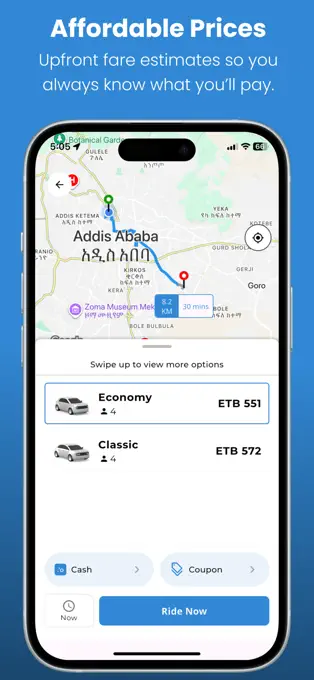
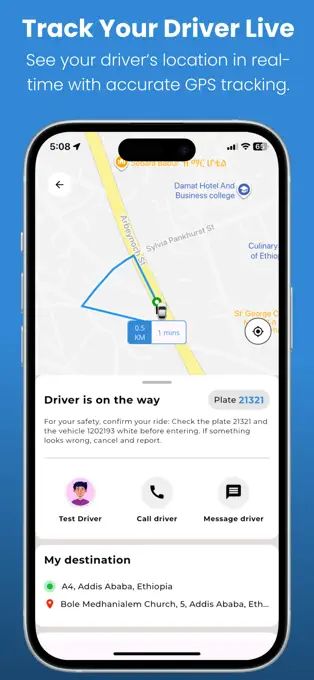
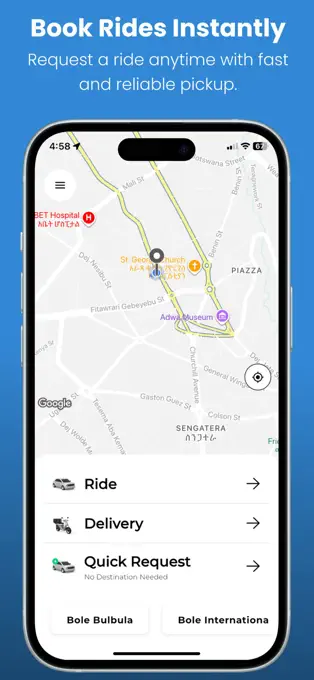
The basic passenger journey is registration, pickup and destination, fare or quote, request, driver match, live arrival, verified trip start, trip tracking, payment, receipt, rating, and support. The driver journey adds document review, availability, incoming requests, navigation, trip states, earnings, payout status, and help.
Behind both apps, the operator needs a live dispatch view, manual reassignment, driver and vehicle approval, zones and fare configuration, trip search, complaints, refunds, finance reports, audit logs, role-based permissions, and controlled configuration changes.
Prepare production hosting, domain and TLS, database, backups, logs, app-store accounts, maps, SMS/OTP, push notifications, callback URLs, monitoring, and test accounts early. These are inspection and operations dependencies, not finishing touches.
Step 5 | Ownership
Brand registration and software ownership are related but different. Clarify both before the final release.
Step 6 | Security inspection
Inspection readiness is a development discipline. Reconstructing architecture, requirements, roles, and test evidence after coding is finished is slower and less reliable.
The proposal’s submission package covers the valid business licence, copyright evidence, software requirements, installation builds or accepted test method, architecture, API documentation, and accounts for the passenger, driver, dispatcher, support, finance, and administrator roles. It treats mobile, web/admin, and API scope as distinct technical layers.
Document authentication, authorization, callbacks, trip and payment states, error handling, domain and TLS, database, backups, logging, access control, and hosting. Test account permissions should match the real responsibility of each role. After assessment, fix findings, submit closure evidence, and keep the final result with the company records.
Use the official INSA portal for the current submission process. Do not depend on an old screenshot, a forwarded checklist, or another company’s exact document set.
Step 7 | Current approvals
The process documented in DreamTech’s August 2026 proposal places the current MInT check after the system and INSA evidence are ready, followed by permission from the responsible transport authority.
Ask for the current ride-hailing or digital-platform process. Be ready with company records, business licence, app description, server or IP information, INSA result, screenshots, and demo access. Ask the office to write down any changed requirement.
Prepare the licence, system and hosting information, INSA evidence, vehicle evidence, and any MInT result requested by the responsible transport authority. Confirm the current office and appointment procedure before travelling.
Step 8 | Payments and support
A payment is not complete when a button says “successful.” The operator must be able to prove what the passenger paid, what the driver earned, what the platform retained, and what happened when any part failed.
For Telebirr and related Ethio telecom onboarding, the proposal lists renewed company records, TIN, VAT certificate where applicable, memorandum and articles where applicable, a request letter, INSA evidence, a company stamp for signing, and the company bank account. Always obtain the current checklist from the provider.
Test the complete callback lifecycle: pending, successful, failed, delayed, duplicated, reversed, refunded, and timed out. Never allow a delayed callback to charge twice or turn one trip into two ledger entries. Cash trips need their own driver collection and settlement workflow.
The call centre needs trip context, passenger and driver identity, live status, communication history, payment state, refund authority, and an escalation route. Support access should be logged and limited by role.
Step 9 | Pilot and go-live
A controlled pilot is not a ceremonial app release. It is a measured production exercise with real support, real settlement, and a clear stop condition.
Expand one variable at a time: more hours, more zones, more drivers, then more ride types. That makes failures understandable. Adding a new city, parcel delivery, food delivery, subscriptions, and complex pricing at once makes learning almost impossible.
Budget and timeline
Exact prices age quickly. Build a living model with current quotes and a conservative reserve instead of copying a single project number from the internet.
Company and official fees, brand and IP work, product design, development or licensing, security remediation, deployment, devices, and training.
Cloud compute and storage, maps and routing, SMS/OTP, calls, email, monitoring, payment fees, app-store accounts, and support tools.
Operations, dispatch, support, finance, safety, driver onboarding, inspections, field work, incentives, marketing, refunds, and insurance.
Avoidable mistakes
Starting a full build before confirming the company activity and evidence path
Treating passenger and driver apps as the whole product
Writing inspection documents after development instead of alongside it
Using personal cloud, domain, store, map, SMS, or payment accounts for company infrastructure
Launching promotions before driver supply and support coverage are stable
Showing a fare without a precise, versioned pricing and cancellation rule
Recording successful payments but not provider callbacks, reversals, refunds, and settlement
Adding food, parcel, subscriptions, bidding, and multiple cities before the core ride loop works
Frequently asked questions
No. The app is one part of a transport operation. You also need the appropriate business setup, driver and vehicle verification, dispatch and support processes, security review, transport permission, payment reconciliation, safety procedures, and the records needed to operate responsibly.
DreamTech's August 2026 proposal and launch experience identify field 71113, Land transport and related services. Activity names and evidence requirements can change, so confirm the current wording and requirements with MESOB, the trade office, or the responsible licensing office before filing.
The process documented in the proposal required evidence for at least one business vehicle and its libre. Confirm how ownership is handled for your company form before you transfer a vehicle or submit an application.
No. INSA evaluates the digital system's security. The responsible transport authority handles transport permission. Keep the roles separate when planning documents and dependencies.
Plan for the full system scope: passenger and driver apps, web admin and dispatch tools, APIs, hosting, database, security controls, backups, logs, and test accounts. The proposal also identifies separate SRS and technical documentation for the relevant mobile, web, and API layers.
Use white-label software when speed and a proven baseline matter more than ownership and deep differentiation. Choose custom development when your operating model, integrations, pricing, data ownership, or future roadmap is genuinely distinctive. In both cases, inspect source-code rights, exportability, hosting control, documentation, security evidence, and recurring fees.
The proposal's operating model supports both, subject to approval for the business. The platform must record the selected method, prevent duplicate collection, issue a traceable receipt, and reconcile cash and digital settlements separately.
There is no safe universal promise because product scope, document readiness, inspection findings, and government processing affect the date. DreamTech's proposal plans a 3-5 month combined delivery and approval effort, but founders should treat that as a project assumption, not an official processing guarantee.
Budget for company and official fees, vehicle and insurance requirements, cloud hosting, maps, SMS/OTP, calls, app-store accounts, payment transaction fees, support staff, driver acquisition, customer support, monitoring, maintenance, refunds, and promotions. Get current quotations because usage-based and official charges change.
Usually only if the same target market, driver supply, operations team, and economics support all three. Every extra vertical adds exceptions, training, customer-support cases, and reconciliation work. A focused city pilot is often easier to learn from than a broad launch.
Sources and further reading
The practical sequence and operating detail on this page come primarily from Dream Technologies’ August 2026 ride-hailing proposal and the team’s documented Peace Ride launch experience. The external articles below informed the market-validation, platform-choice, and feature-checklist sections.
Last reviewed: 12 August 2026. The source proposal is a commercial document prepared by Dream Technologies; this public guide removes client-specific terms and separates experience-based guidance from official requirements.