


























ERP and management systems
Role-based workflows for finance, inventory, HR, operations, approvals, and reporting.
Comprehensive capabilities designed to cover every aspect of custom web application development.
Clarifying the product
A website mainly helps people find and read information, understand an organization, and make contact. Its core work is publishing and presenting content.
A web application lets authenticated or public users perform ongoing tasks. It stores and changes business data, applies rules, manages roles and approvals, connects to other systems, and supports an operation. An ERP, SaaS product, booking platform, dashboard, marketplace, CRM, customer portal, fintech system, or e-commerce back office is a web application.
Role-based workflows for finance, inventory, HR, operations, approvals, and reporting.
Multi-tenant products with subscriptions, account administration, usage controls, and product analytics.
Availability, reservations, payments, notifications, staff operations, and customer self-service.
Secure access to operational data, documents, tasks, services, reports, and approvals.
Buyer, seller, catalog, order, commission, payment, fulfillment, and dispute workflows.
Lead, customer, pipeline, communication, activity, assignment, and performance management.
Transaction-led applications with verification, auditability, permissions, reconciliation, and provider integrations.
Catalog, inventory, orders, customer service, promotions, delivery, finance, and management reporting.
We separate user interfaces, business rules, APIs, data, background work, and external services so each area can be tested, secured, and changed responsibly.
Payment, SMS, identity, maps, ERP, accounting, and partner integrations are designed around current API access, retries, verification, and failure handling.
Authentication, role-based authorization, input validation, encryption, secrets, audit logs, dependency review, and incident responsibilities are treated as product requirements.
Production environments can include automated delivery, managed databases, backups, logs, monitoring, domain and certificate management, and documented recovery procedures.
We size for realistic demand first, then design measurable paths for caching, queues, database tuning, service separation, and additional capacity as usage grows.
Post-launch work can cover monitoring, defect resolution, dependency and security updates, operating support, performance review, and planned product iterations.
We use agile sprints so you can see progress early, review real features, and guide the next priority before the project moves forward.
Agile sprint cycle
Approved priority in. Reviewed feature out.
Choose the next priority features from the approved backlog.
Confirm user flow, UI, architecture, data, and acceptance rules.
Develop working features in small, reviewable increments.
Check quality, integrations, edge cases, and client feedback.
Demo progress, approve changes, and update the next sprint.
Review becomes the next sprint plan
Approved feedback updates the backlog and determines what the team builds next.
You approve priorities before each sprint starts.
You review working software instead of guessing from documents.
Feedback becomes the next sprint plan, keeping scope controlled.
Vertical solutions tailored for specific industries across Ethiopia from healthcare, education, transport, enterpire, manufacturing and media to finance and logistics.
Performance targets guide architecture, media, caching, and delivery decisions.
Rendering, metadata, internal linking, and crawlability are planned for search accessibility.
Pixel-perfect experiences across all devices and screen sizes.
Threats, access, encryption, testing, logging, and operational controls are scoped to the application.
Selected web applications and software platforms with operational workflows, data, integrations, and multiple user roles.
Integrated hotel management and booking platform with availability, front-desk, housekeeping, POS, channel, and reporting workflows.
Integrated hotel management and booking platform with availability, front-desk, housekeeping, POS, channel, and reporting workflows.
The Challenge
Phone-based booking, disconnected restaurant POS, and limited online availability can increase overbooking risk and make guest service harder to coordinate.
Solution Scope
PMS scope that can include an online booking engine, OTA channel connections subject to third-party API access, and coordinated food-and-beverage POS workflows.
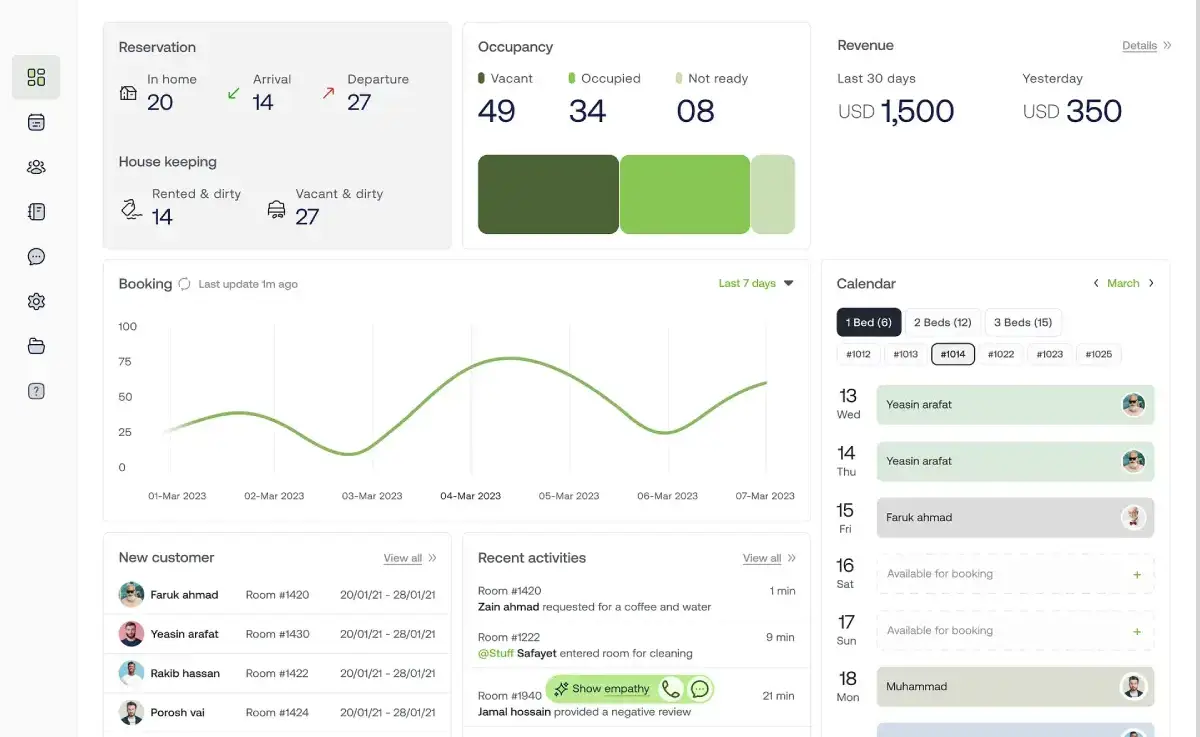
Integrated hotel management and booking platform with availability, front-desk, housekeeping, POS, channel, and reporting workflows.
The Challenge
Phone-based booking, disconnected restaurant POS, and limited online availability can increase overbooking risk and make guest service harder to coordinate.
Solution Scope
PMS scope that can include an online booking engine, OTA channel connections subject to third-party API access, and coordinated food-and-beverage POS workflows.
An all-in-one e-commerce platform that allows users to buy products easily and businesses to sell online.
An all-in-one e-commerce platform that allows users to buy products easily and businesses to sell online.
The Challenge
Customers lack a reliable local marketplace, while businesses struggle to manage online sales efficiently.
Solution Scope
Enova Mart provides a smooth shopping experience with product browsing, secure transactions, and easy product management.
Enova Mart
Customer app


Enova Mart Seller
Seller app
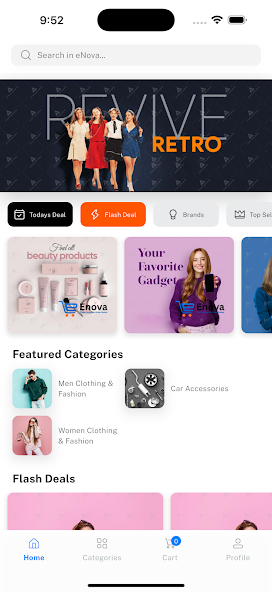
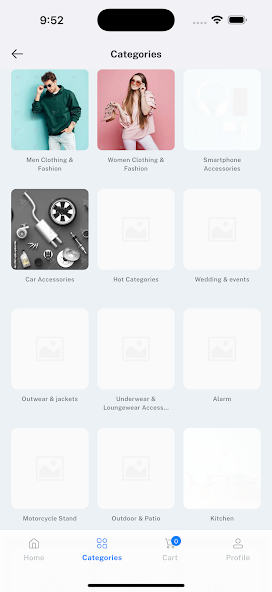
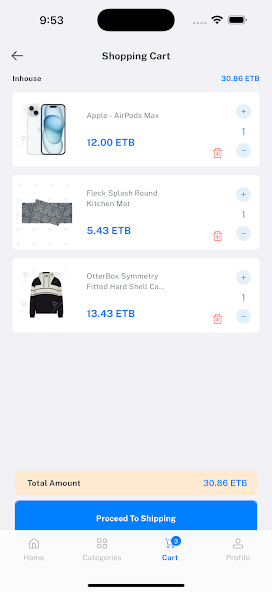
An all-in-one e-commerce platform that allows users to buy products easily and businesses to sell online.
The Challenge
Customers lack a reliable local marketplace, while businesses struggle to manage online sales efficiently.
Solution Scope
Enova Mart provides a smooth shopping experience with product browsing, secure transactions, and easy product management.
Enova Mart
Customer app
Enova Mart Seller
Seller app
Digital loan management implementation overview with a field-team mobile app, credit assessment workflow, and repayment tracking.
Digital loan management implementation overview with a field-team mobile app, credit assessment workflow, and repayment tracking.
The Challenge
Paper-based loan processing, limited repayment visibility, and no mobile access for field teams can delay decisions and portfolio reporting.
Solution Scope
Digital loan-lifecycle scope that can include a field-agent mobile app, configurable credit-assessment rules, and repayment-status reporting.
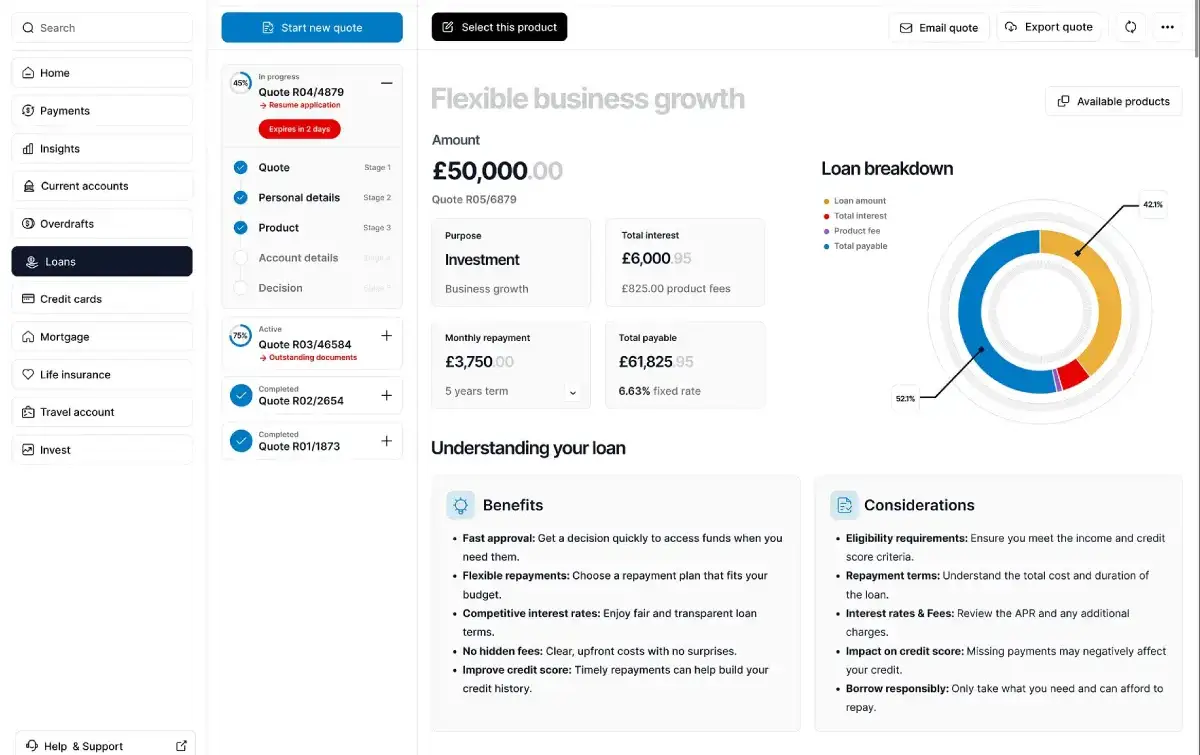
Digital loan management implementation overview with a field-team mobile app, credit assessment workflow, and repayment tracking.
The Challenge
Paper-based loan processing, limited repayment visibility, and no mobile access for field teams can delay decisions and portfolio reporting.
Solution Scope
Digital loan-lifecycle scope that can include a field-agent mobile app, configurable credit-assessment rules, and repayment-status reporting.
Online appointment scheduling and patient-management implementation overview with reminders, shared records, and queue workflows.
Online appointment scheduling and patient-management implementation overview with reminders, shared records, and queue workflows.
The Challenge
Phone-only booking, missed appointments, and disconnected patient history can make multi-clinic scheduling difficult to coordinate.
Solution Scope
Scheduling scope that can include online appointment requests, SMS or push reminders, shared patient records where authorized, and walk-in queue workflows.
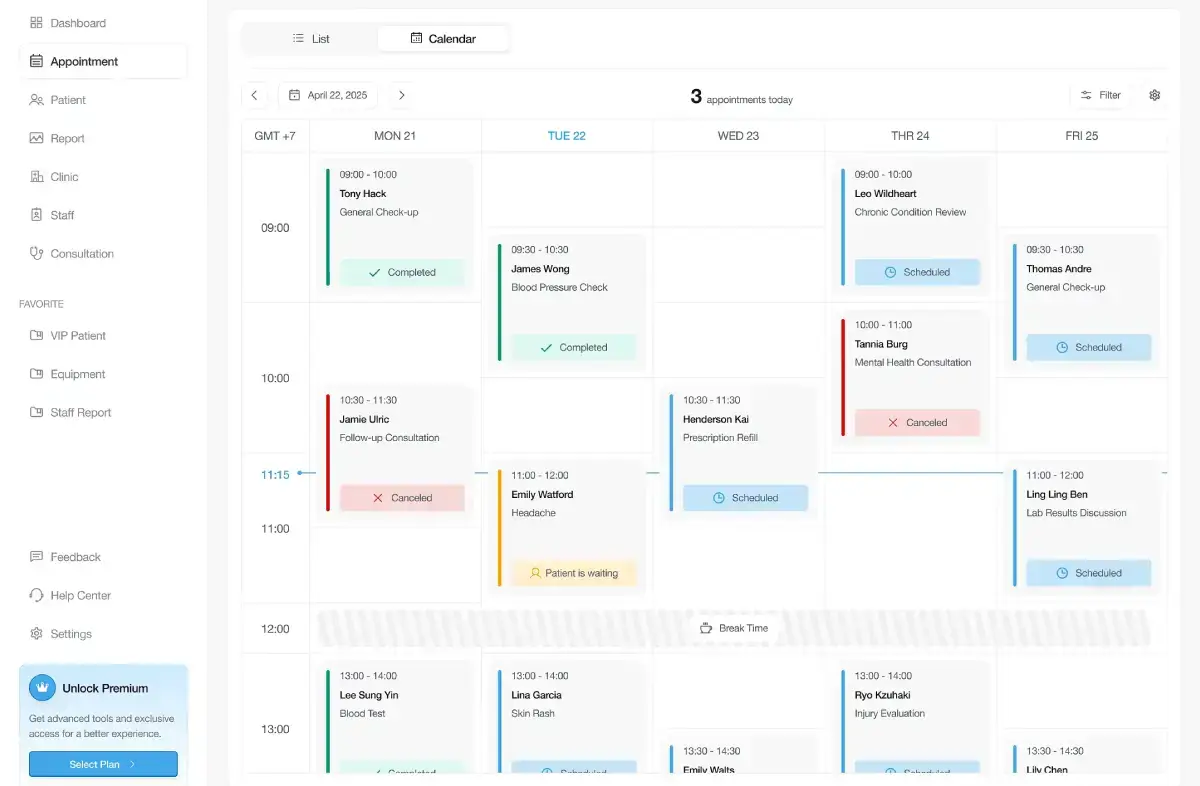
Online appointment scheduling and patient-management implementation overview with reminders, shared records, and queue workflows.
The Challenge
Phone-only booking, missed appointments, and disconnected patient history can make multi-clinic scheduling difficult to coordinate.
Solution Scope
Scheduling scope that can include online appointment requests, SMS or push reminders, shared patient records where authorized, and walk-in queue workflows.
Practical answers for Ethiopian organizations planning a software project.
A website mainly publishes information and supports discovery or enquiries. A web application lets users perform ongoing tasks, changes business data, applies rules and permissions, and often connects with other systems.
Yes, after reviewing the current code, data, integrations, security, hosting, user problems, and business risk. The result may be phased improvement, selective replacement, or a planned rebuild rather than an automatic rewrite.
These integrations can be scoped after confirming the provider's current access, documentation, security model, commercial terms, failure behavior, and production approval requirements.
An agreed support plan can cover monitoring, backups, incident handling, fixes, security and dependency updates, performance work, user support, and planned product improvements.
Yes. Your company owns the domain, and registration is managed through your company email.
Yes. We configure and deploy the project through accounts under your email during development, so you have control from the start.
Yes. We help create your GitHub account under your email, connect to your repository, and work from there. Your project lives in your repository during development; source-code transfer is part of handover.
Yes. Your company owns the database and website content, with access included in handover.
Yes. You receive full admin access and training. We provide a Google Docs handover document under your email covering account ownership, configuration, deployment, included features, and how to update the website.
Yes. Your accounts, repository, code, database, and documentation allow another developer to take over. Any third-party platform or license terms are identified in the proposal.
Yes. Backups run twice a day. Your handover explains backup storage, retention, and how to restore the website.
45 days after launch. We confirm the support contact and included work in your proposal.
DreamTech takes responsibility for responding to a website hack and handling recovery. The proposal records the incident contact, response process, and ongoing security arrangements.
Yes. We integrate Chapa and Telebirr based on your package and requirements. Both are included in the ETB 55,000 package; adding payments later to another package is quoted before work starts.
Let's discuss your custom web application development requirements. Book a free consultation and get a detailed project proposal.
Free project consultation
Book a free consultation to discuss requirements, constraints, delivery options, and the information needed for a scoped proposal.